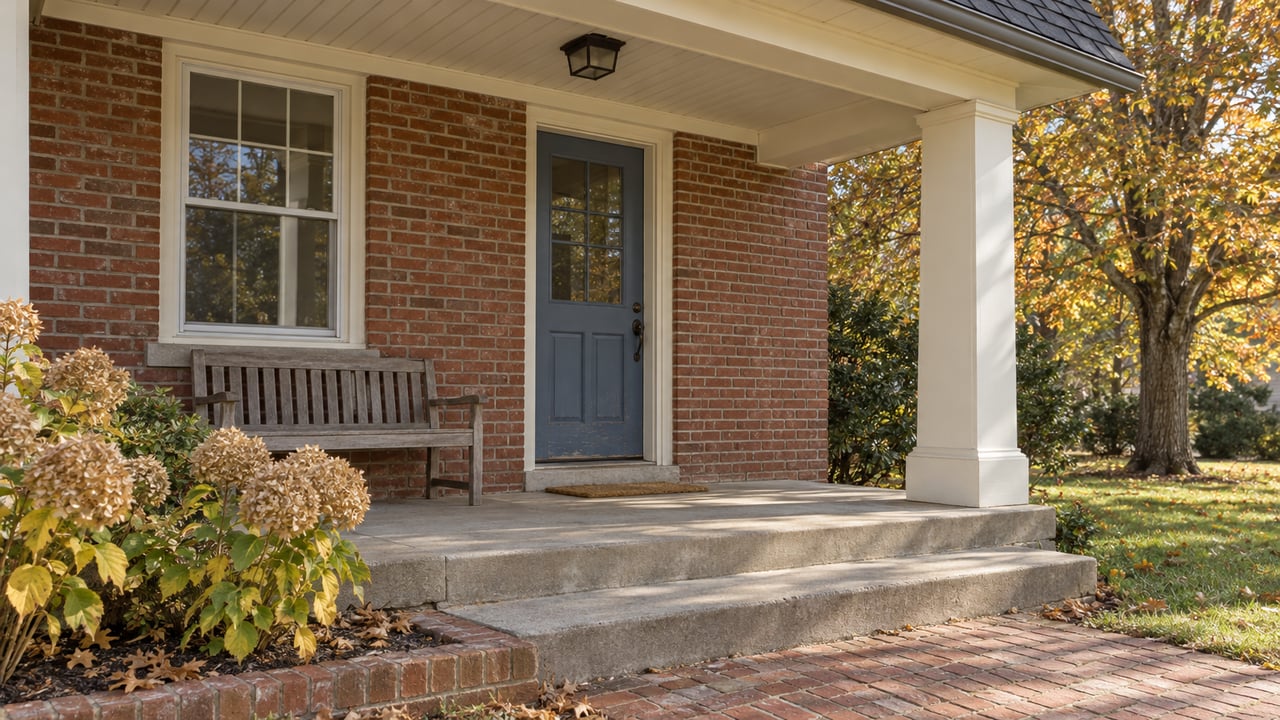
You found the house.
It has the acreage.
The shop.
The privacy.
The view.
And then somewhere during the showing I ask:
“Do we know where the septic tank is?”
Welcome to rural real estate. 😂
If you have always lived in a home connected to municipal water and sewer, you may have never thought much about what happens when you turn on the faucet or flush the toilet.
Buy a rural property, and suddenly we are talking about wells, pressure tanks, septic tanks, absorption fields, permits, pumping records, and water testing.
That does not mean you should be afraid of a property with a private well and septic system.
Plenty of Missouri homeowners use them every single day.
It simply means there are a few additional things I want you to understand before buying the property.
What Is the Difference Between Public Utilities and a Private Well and Septic System?
In a home connected to public utilities, a municipality or utility provider generally supplies water and handles wastewater.
With a private well, the property has its own water source.
With an onsite wastewater system, commonly called a septic system, wastewater is treated on the property rather than being sent through a municipal sewer system.
That means the homeowner assumes more responsibility for maintaining those systems.
You may not receive a monthly municipal water and sewer bill.
But you are responsible when the well pump stops working or the septic system needs service.
That tradeoff is something buyers should understand.
How Common Are Septic Systems in Missouri?
More common than you might think.
The Missouri Department of Health and Senior Services estimates that approximately 25 percent of Missouri homes use onsite wastewater treatment systems.
Once you get outside larger Mid Missouri cities, encountering septic systems becomes increasingly common.
That is especially true when I am showing acreage and rural properties throughout areas like Callaway County.
So if you are looking for five acres outside Fulton, do not be surprised when the listing says:
Private well and septic.
That is not automatically a red flag.
It is simply something we need to investigate.
How Does a Private Well Work?
A private well accesses groundwater beneath the property and uses a pump to bring that water into the home.
Missouri regulates the construction of private water wells through the Missouri Department of Natural Resources.
The state notes that groundwater availability and quality can vary depending on location and geology.
That is an important point.
A well existing on the property does not automatically answer every question about the home's water supply.
I still want to know more about it.
What Should You Ask About a Private Well Before Buying?
Start with the basics.
Where is the well located?
How old is it?
How deep is it?
Are construction records available?
What type of pump does it use?
How old is the pump?
Is there a pressure tank?
Are there water treatment or filtration systems?
When were those components last serviced?
Has the seller experienced any issues with water pressure or supply?
And has the water recently been tested?
Missouri DNR maintains records for many wells constructed after state well regulations took effect in the mid 1980s, so records may be available depending on the property.
The more we can learn about the system before closing, the better.
Should You Test Well Water Before Buying a House?
Water testing is something buyers of private well properties should consider as part of their due diligence.
The Missouri Department of Health and Senior Services provides guidance for private drinking water testing, and local public health agencies may also be resources for testing information.
What should be tested can depend on the property and circumstances.
If something about the water raises a question, we may also need additional evaluation.
Maybe there is an unusual odor.
Maybe the water has discoloration.
Maybe the property is near a potential contamination source.
Maybe the home has an existing treatment system.
Do not simply turn on the kitchen faucet, see clear water, and decide everything must be fine.
Clear water and tested water are not the same thing.
What Is a Septic System?
A septic system treats household wastewater onsite.
While systems can vary, a conventional setup commonly includes a septic tank and a soil treatment or absorption area.
Wastewater leaves the house and enters the tank.
Solids settle.
The remaining wastewater is treated further through the system and surrounding soil.
And that means something incredibly important for buyers:
The septic system is more than the tank.
The location and condition of the treatment area matter too.
Where Is the Septic Tank?
You would be surprised how often the initial answer is:
“Somewhere over there.”
That is not quite enough for me. 😂
I want to know where the tank is located.
I also want to understand where the treatment area is located and whether records or permits exist.
This matters for maintenance.
It can also matter if you plan to add a pool, build a shop, install fencing, create an addition, or otherwise change the property.
You do not want to buy five acres, pick the perfect location for your future detached garage, and later discover that your plan conflicts with the septic system.
Should You Have the Septic System Inspected Before Buying?
This is where Missouri buyers need to understand an important distinction.
Missouri does not universally require an onsite wastewater inspection before every residential real estate transaction.
However, an inspection may be required by a lender, local jurisdiction, or the terms of your transaction.
And buyers can choose to investigate the system as part of their due diligence.
Missouri also distinguishes between an onsite wastewater inspection and an evaluation.
A full inspection includes a hydraulic test of the soil treatment system.
An evaluation does not.
That is a meaningful difference.
If you are hiring someone to look at the septic system, understand exactly what service you are purchasing.
Do not assume every “septic check” means the same thing.
Does the Septic Tank Need to Be Pumped?
Septic tanks require ongoing maintenance, including periodic pumping.
How frequently a particular system needs service can depend on factors such as household size, tank size, water use, and the system itself.
When I am helping a buyer evaluate a property, I want to ask whether the seller has maintenance or pumping records.
When was it last pumped?
Who serviced it?
Were any problems identified?
Have repairs been completed?
Documentation is helpful.
If the seller does not have records, that does not automatically mean something is wrong.
It simply means we may have less historical information.
What Are the Signs of a Septic Problem?
There are some conditions buyers should pay attention to.
Slow drains.
Sewage odors.
Standing water.
Unusually wet ground around the treatment area.
Wastewater backing up into the house.
Or evidence that the system has had recurring problems.
Not every wet spot in a Missouri yard means the septic system is failing.
We get rain here.
A lot of it sometimes.
But if something raises a question, investigate rather than guessing.
What Is a Septic Variance?
This is a term buyers occasionally encounter, particularly with properties where site conditions required something outside the standard requirements.
A variance generally involves approval for a system or installation that differs from otherwise applicable requirements.
If a property has a variance, I want documentation.
What was approved?
When?
By whom?
What does the variance apply to?
Does it affect maintenance, replacement, or future plans for the property?
The existence of a variance does not automatically mean you should not buy the property.
It means we should understand it.
That is a recurring theme with rural real estate:
Do not panic.
Get documentation.
Ask questions.
Can You Build Over a Septic System?
This is exactly why buyers need to know where the system components are located before making future plans.
You should not simply assume every open portion of your acreage is available for construction.
Septic components and required separation distances can affect where improvements can be located.
Other factors such as wells, easements, utilities, drainage, zoning, and topography can matter too.
If you are buying the property because you specifically want to add a shop, pool, barn, second structure, or addition, investigate whether your plan is feasible before closing.
Five acres does not automatically mean five acres of unrestricted building space.
Can a Well and Septic System Be Too Close Together?
Location matters.
Missouri has separation requirements intended to protect drinking water sources from potential contamination.
The exact requirements can depend on the systems and site conditions.
This is not something I expect a buyer to stand in the yard and measure with a tape measure during a showing.
It is something qualified professionals and available records can help us evaluate.
If there is a concern, bring in the right person.
What Happens if the Well or Septic System Fails After Closing?
Once you own the property, maintenance and repairs generally become your responsibility unless another agreement or applicable warranty says otherwise.
And repairs can range from relatively minor to significant.
A well pump may eventually need replacement.
A pressure tank may fail.
Water treatment equipment needs maintenance.
A septic system may need pumping.
Components can deteriorate.
A treatment area can develop problems.
That is why due diligence matters.
An inspection cannot guarantee that a system will never fail.
It can help you make the purchase with more information.
Is a Home With Well and Septic Harder to Sell?
Not necessarily.
Throughout rural Missouri, wells and septic systems are completely normal parts of homeownership.
A buyer specifically looking for acreage outside Fulton, New Bloomfield, Boonville, California, Mexico, or another Mid Missouri community may expect to encounter them.
Condition and documentation can make a difference.
A properly functioning system with available records is a very different conversation from a seller who says:
“I think the septic tank is somewhere behind the barn, but I have never done anything with it.”
Information creates confidence.
What Should Buyers Check Before Purchasing a Well and Septic Property?
I want to understand four things:
What exists?
What type of well and septic system serve the property?
Where is it?
Where are the well, tank, and treatment areas located?
What do we know about it?
Are permits, records, service history, water tests, or inspections available?
Does it work for your future plans?
If you want a pool, shop, barn, addition, or other improvement, could these systems affect that plan?
Those four questions will get you much further than simply asking:
“Does the septic work?”
Buying a Rural Home in Fulton or Callaway County?
This is where rural property due diligence becomes especially important.
Fulton gives buyers access to a smaller community while the surrounding Callaway County area can offer acreage, privacy, outbuildings, and rural settings within reach of Columbia and Jefferson City.
But once you move outside municipal utility areas, the systems serving the property can change.
You may encounter private wells.
Septic systems.
Propane.
Electric cooperatives.
Rural water districts.
Private roads.
Easements.
Outbuildings.
And acreage that deserves additional investigation.
None of those things make a property bad.
They simply mean we ask different questions.
Looking for Acreage or a Rural Home in Mid Missouri?
Whether you are searching outside Fulton, New Bloomfield, Mexico, California, Boonville, Hallsville, Moberly, or elsewhere throughout Mid Missouri, do not let a well or septic system automatically scare you away from a property you love.
Understand it.
Inspect it when appropriate.
Find the records that are available.
Ask questions.
And make sure the property works for what you actually want to do with it.
Rural homeownership can give you privacy, land, flexibility, and a lifestyle that is hard to recreate inside city limits.
You just need to know where your water comes from.
And where everything goes after you flush the toilet.
Real estate is glamorous like that. 😂