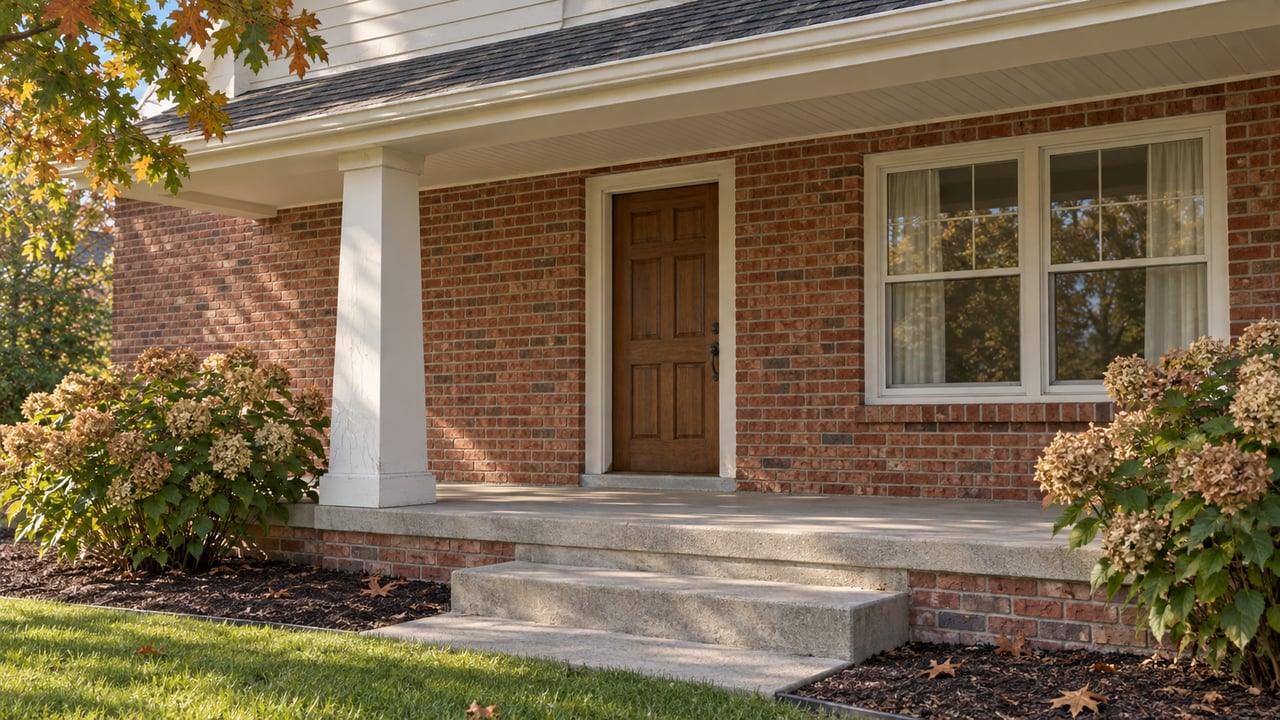
You find a house you love.
The price looks good. The location works. Maybe it needs a little updating, but you can already picture what you would do with it.
Then you see two words in the listing:
AS IS.
And suddenly it sounds like you are about to buy a house where the roof could cave in on Tuesday and you are not allowed to ask a single question about it.
Not necessarily.
“As is” is one of those real estate phrases that sounds straightforward but can mean very different things depending on how the purchase contract is written.
And that last part is important.
If you are buying an as is property in Missouri, do not make assumptions about what rights you do or do not have.
Read the contract.
Understand your inspection rights.
Understand your financing.
And know exactly what you are agreeing to before you sign.
Here is what I want my buyers to understand.
What Does “As Is” Mean in Real Estate?
Generally speaking, an as is sale means the seller is offering the property in its existing condition and does not intend to make repairs or improvements as part of the transaction.
Maybe the seller inherited the property and does not want to renovate it.
Maybe it is an investment property.
Maybe the home needs updating.
Maybe the seller simply wants a straightforward sale without negotiating a long list of repairs after inspection.
“As is” does not automatically mean the property is in terrible condition.
I have seen as is homes that need substantial work.
I have also seen perfectly livable homes sold as is because the seller simply does not want to make repairs.
The phrase tells us something about the seller’s position.
It does not tell us everything about the house.
Can You Still Get a Home Inspection on an As Is Property?
Depending on the contract you sign, yes.
This is probably the biggest misconception I hear.
Buying a property as is does not necessarily mean you have to skip inspections.
Missouri REALTORS® has different contractual options for as is transactions, and the buyer’s rights can vary substantially depending on which option is selected.
For example, a buyer may retain the right to inspect and potentially terminate while agreeing not to negotiate repairs or a price reduction.
Another contractual option may allow inspections for informational purposes while waiving the ability to terminate or negotiate based on the results.
And a buyer can potentially waive inspections altogether.
Those are very different situations.
That is why I do not want my buyers relying on the phrase “as is” in a listing description to determine their rights.
We need to look at the actual contract.
Does As Is Mean You’re Stuck With Whatever You Find?
Again, it depends on the contract.
If your agreement preserves an inspection and termination right, you may be able to inspect the property and decide whether you are comfortable moving forward based on what you discover.
If you waived that termination right, your options may be much more limited.
And if you waived inspections entirely, that is a different level of risk.
This is why the conversation needs to happen before the offer is submitted.
I want you to understand exactly what you are agreeing to when we structure the offer, not discover it after the inspector finds something expensive.
Why Would You Inspect a House if the Seller Won’t Make Repairs?
Because information has value.
Let's say the seller has made it clear that they are not repairing anything.
I may still want my buyer to understand the condition of the roof, foundation, electrical system, plumbing, HVAC, attic, crawlspace or basement, and other major components.
Maybe the inspector finds nothing particularly alarming.
Great.
Maybe the inspector identifies an issue you were already expecting.
At least now you have more information about what ownership may cost.
Or maybe the inspection uncovers something significant that completely changes how you feel about the purchase.
The purpose of an inspection is not simply to create a repair list for the seller.
It is also due diligence.
Can You Ask an As Is Seller to Make Repairs?
This is another situation where the answer depends on the contract.
An as is agreement may specifically waive your ability to negotiate repairs or a price reduction based on inspections.
In another transaction, the contract may preserve different rights.
And sometimes something unexpected happens during a transaction that requires the parties to have another conversation.
The important point is that you should not enter an as is transaction assuming you will simply renegotiate everything after the inspection.
If the seller's position is that the property is being sold in its current condition, we need to take that seriously when deciding what you are willing to pay and what risks you are comfortable accepting.
Can You Negotiate the Price of an As Is Home?
“As is” does not automatically mean “full price.”
Price and condition are connected.
If a home needs significant work, that may already be reflected in the asking price.
Or it may not be.
Before making an offer, I want to look at comparable sales, the condition of the property, how long it has been on the market, previous price changes, current competition, and whatever information we already have about the home's condition.
Then we can decide what the property is worth to you.
Sometimes an as is home can create an opportunity.
But a lower price only makes sense if the cost and risk of the work still make sense for you.
As Is Does Not Mean You Should Ignore the Seller’s Disclosures
An as is transaction and property disclosure are separate issues.
You should review whatever disclosures and property information are available to you rather than assuming the words “as is” tell you everything you need to know.
Depending on the transaction, the seller may provide information about known conditions, previous repairs, water intrusion, systems, environmental concerns, or other property characteristics.
There may also be situations where limited information is available.
For example, an estate, investor, relocation company, or other seller may have less firsthand knowledge about a property than someone who lived there for 25 years.
That is another reason inspections and independent due diligence can become especially important.
Financing Can Change the Conversation
This is a BIG one.
The seller may be perfectly willing to sell a property as is.
Your lender may have something to say about the property's condition.
Those are two separate things.
Different loan programs and lenders have different property requirements.
With certain financing, an appraisal may identify conditions that must be addressed before the lender will allow the loan to close.
That can create a problem if the seller's position is:
“I am not repairing anything.”
This is why your financing matters when considering an as is property.
Before getting emotionally attached to a home that clearly needs work, talk with your lender about the property and your loan program.
What About FHA, VA, and USDA Loans?
Government backed financing can add another layer to an as is purchase because the property may need to satisfy applicable program and lender requirements.
That does not mean every cosmetic defect needs to be fixed.
It does mean certain property conditions can affect whether the loan can close.
VA, for example, uses Minimum Property Requirements for homes financed with VA backed loans. VA also makes an important distinction that I wish more buyers understood:
An appraisal is not a home inspection.
The VA appraiser evaluates value and whether the property meets applicable minimum property requirements. A home inspector performs a different job.
Other financing programs can have their own requirements as well.
So if you are using FHA, VA, USDA, or another loan program to purchase an as is property, get your lender involved early.
Do not assume that because the seller accepts your offer, the property's condition will automatically work with your financing.
Appraisal Repairs and Inspection Repairs Are Not the Same Thing
This is another distinction buyers should understand.
An inspector might identify something they recommend repairing.
That does not automatically mean your lender will require it.
Likewise, an appraiser may identify a property condition affecting the loan even if you personally are comfortable buying the home that way.
Those are two separate processes serving different purposes.
Your inspection is primarily about helping you understand the condition of the property.
The appraisal primarily addresses value and, depending on the loan program, applicable property requirements.
That is why an as is transaction can become complicated when financing is involved.
When Can an As Is Home Be a Good Opportunity?
Honestly, sometimes they are my favorite properties to look at with the right buyer.
“As is” can scare people.
And anything that reduces the buyer pool can potentially create an opportunity.
Maybe the house needs cosmetic updates that you were planning to make anyway.
Maybe you are comfortable replacing flooring and painting.
Maybe you have experience renovating homes.
Maybe the property has great bones but simply has not been updated since 1997.
Or maybe the seller values convenience enough that the price reflects the property's condition.
The key is understanding the difference between a house that needs updating and a house with serious problems.
Those are not the same thing.
What Should You Pay Extra Attention to?
When I am helping someone evaluate an as is property, I want to understand the big ticket items.
Roof.
Foundation.
Structural components.
Electrical.
Plumbing.
HVAC.
Water intrusion.
Sewer or septic.
Well, if applicable.
Termites or wood destroying insects.
Environmental concerns when applicable.
And anything unusual about the property that warrants a specialist.
Cosmetic issues can usually be quantified fairly easily.
A structural problem, major water issue, failing septic system, or substantial electrical deficiency can change the financial picture very quickly.
Should You Buy an As Is Home Without an Inspection?
That is a risk decision you should make only after understanding exactly what you are giving up.
There are situations where buyers choose to waive inspections to make an offer more competitive.
There are also investors and experienced buyers who are comfortable evaluating certain risks differently.
But “the seller said as is” is not, by itself, a reason to skip due diligence.
I would rather have you make an informed decision about inspections based on the property, your contract, your financing, your experience, and your tolerance for risk.
Is Buying an As Is Home a Bad Idea?
No.
It can be.
But it can also be a fantastic purchase.
“As is” is not automatically a red flag.
It is a signal to slow down and understand the deal.
What condition is the property actually in?
What inspections are you allowed to perform?
What rights are you retaining?
What rights are you waiving?
Will your financing work with the property's condition?
How much could necessary repairs realistically cost?
And does the purchase still make sense after accounting for those things?
Those questions matter much more than two words in a listing description.
Buying an As Is Home in Missouri?
This is exactly the kind of transaction where I want my buyers asking questions before we write the offer.
If you are considering an as is property in Columbia, Jefferson City, Fulton, Boonville, Sedalia, Lake of the Ozarks, or anywhere else in Mid Missouri, we can look at the entire picture before deciding how to proceed.
We can review the property's history and available disclosures, discuss inspection options, look at comparable sales, talk with your lender about financing requirements, and bring in the appropriate inspectors or specialists when something needs a closer look.
You do not need to be afraid of the words “as is.”
You just need to understand what they mean in your specific contract.
Because in real estate, the details matter.
And when you know exactly what you are agreeing to, you can make a much more confident decision about whether the property is worth saying yes to.